


Red Bull
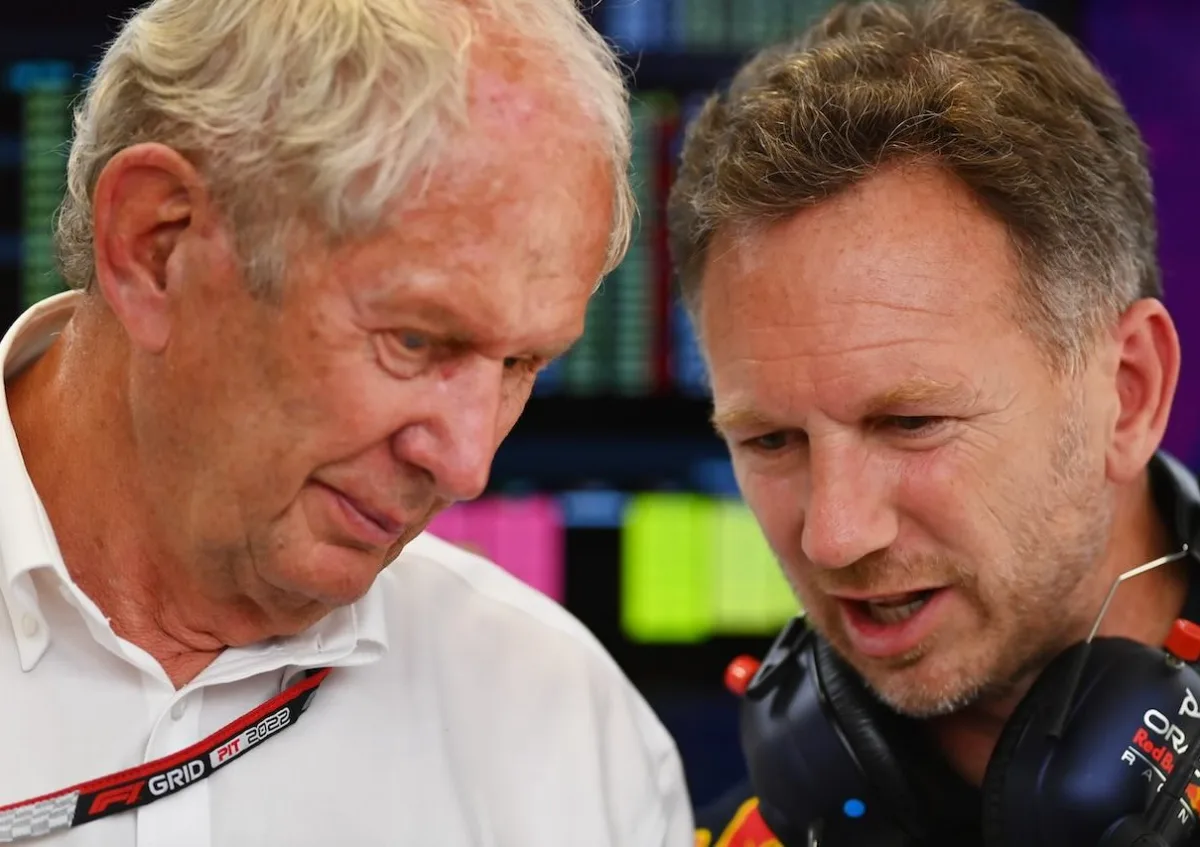
Marko rejects Horner's account of Verstappen signing
Eleanor Hartley · 6h ago · 2 min read
Constructor · P4 · 298 pts
Red Bull
| Rd | Grand Prix | Best finish | pts |
|---|---|---|---|
| 1 | Australian GP | P6 | 8 |
| 2 | Chinese GP | P8 | 4 |
| 3 | Japanese GP | P8 | 4 |
| 4 | Miami GP | P5 | 14 |
| 5 | Canadian GP | P3 | 27 |
| 6 | Monaco GP | P3 | 15 |
| 7 | Barcelona GP | P4 | 20 |
| 8 | Austrian GP | P2 | 26 |
| 9 | British GP | P5 | 13 |
| 10 | Belgian GP | P3 | 23 |
| 11 | Hungarian GP | P2 | 26 |
| 12 | Dutch GP | P7 | 9 |
| 13 | Italian GP | P3 | 15 |
| 14 | Spanish GP | P2 | 26 |
| 15 | Azerbaijan GP | P2 | 33 |
| 16 | Bahrain GPin Malaysia | P1 | 35 |
Red Bull Red Bull Racing are the Milton Keynes-based works team that turned a late-2000s upstart into a serial title winner. They matter now because they are navigating a fresh works power unit era with Red Bull Ford Powertrains while sitting fourth in the 2026 constructors’ standings with one win so far.
The team traces its lineage to Stewart Grand Prix, founded by Jackie and Paul Stewart and based in Milton Keynes, which entered Formula 1 in 1997. Ford acquired Stewart to create Jaguar Racing for 2000, and when Ford exited at the end of 2004, Red Bull GmbH purchased the entry and facility. Red Bull Racing debuted in 2005 and has remained anchored in Milton Keynes ever since.
The new team finished seventh in 2005 and 2006 and rose to fifth in 2007 before slipping back to seventh in 2008, all without a win. The step change arrived in 2009: six victories and second in the constructors’ table signalled that Milton Keynes had built a genuinely front-running car. That breakthrough set the tone for the next four years.
From 2010 to 2013, Red Bull Racing won four consecutive constructors’ championships. The numbers are stark and come from the table: nine wins and the title in 2010; 12 wins and another title in 2011; seven wins and the title in 2012; 13 wins and a fourth straight crown in 2013. Sebastian Vettel led the drivers’ side of the story in those years, with Mark Webber a consistent race winner and points scorer. Adrian Newey’s technical leadership underpinned the era, with Red Bull’s strength built on downforce, consistency and execution.
The hybrid era that began in 2014 shifted the competitive order. Red Bull still managed second in 2014 with three wins, but 2015 brought fourth with no victories. They rebuilt steadily: second in 2016 with two wins, then third place in each season from 2017 to 2019, winning three to four races a year. After second in 2020 with two wins, they mounted a sustained title challenge in 2021, taking 11 victories but finishing second in the constructors’ championship. That season yielded Max Verstappen’s first drivers’ crown, underscoring the team’s resurgence.
A major part of the rebuild was the power unit pathway. After years with Renault, Red Bull switched to Honda power in 2019, and the partnership matured quickly. The results show the effect: by 2022 and 2023 the team had become the benchmark again, pairing strong engines with refined chassis and race operations.
Red Bull’s modern peak came in 2022 and 2023. They won the constructors’ championship in both years, with 17 wins in 2022 and 21 in 2023, numbers that speak to comprehensive dominance. Verstappen led from the front and Sergio Pérez contributed crucial points, while the team’s strategy calls and pit work were among the sharpest on the grid. This was a complete operation, reminiscent of their early-2010s self but adapted to contemporary cost caps and technical rules.
The competitive landscape tightened in 2024 and 2025. Red Bull finished third in both seasons, with nine wins in 2024 and eight in 2025. Those are still hefty numbers, but in constructors’ terms they marked a shift from frontrunner to pursuer. The aggregate suggests rivals matched or exceeded Red Bull’s rate of development across the year, even though the car remained a race-winning proposition.
The 2026 season, still in progress, is a fresh chapter. Red Bull are fourth in the constructors’ standings with 298 points and one win so far, according to the supplied table. The team runs Red Bull Ford Powertrains, bringing the power unit fully in-house in partnership with Ford. A works engine project increases control but adds complexity; early results reflect a bedding-in phase in a field where small margins decide whether a weekend yields a podium or the midfield.
The current base remains Milton Keynes, the same site that evolved from Stewart to Jaguar before Red Bull invested and expanded it into a modern campus. They have won constructors’ titles in 2010, 2011, 2012 and 2013, then again in 2022 and 2023.
Red Bull’s story is one of continuity meeting change. They took over an existing entry in 2005, built a winning culture, survived the early hybrid years, then returned to the top with a new power unit partner and a generational lead driver. Now they are attempting to repeat the formula with Red Bull Ford Powertrains. The standings to date say this is a more contested fight than 2022–23, but their history shows that sustained competitiveness is the baseline expectation at Milton Keynes.
Red Bull
Eleanor Hartley · 6h ago · 2 min read
Red Bull
Eleanor Hartley · 13h ago · 2 min read
Technical analysis
Marcus Reid · 23 Sept · 6 min read
Red Bull Racing
Eleanor Hartley · 23 Sept · 1 min read