


Williams
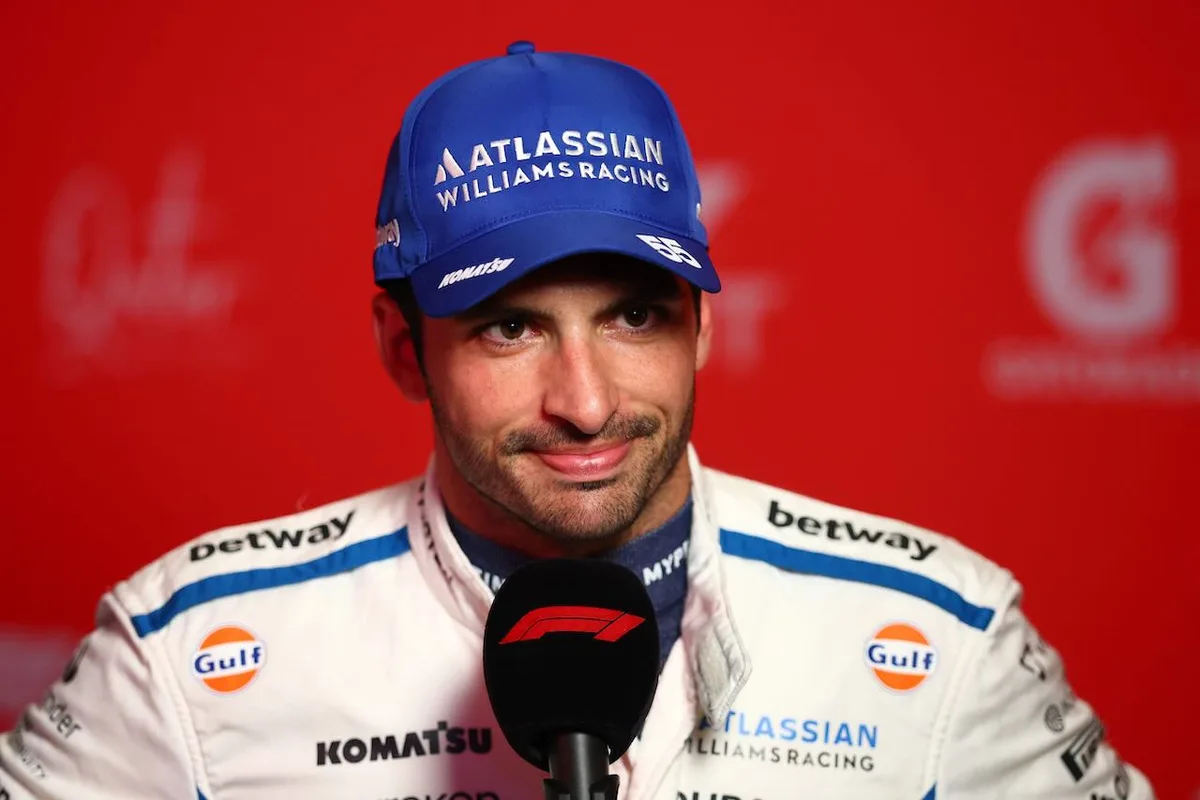
Williams signs Albon to a new multi-year contract
Eleanor Hartley · 16 Sept · 2 min read
Constructor · P9 · 12 pts
Williams
| Rd | Grand Prix | Best finish | pts |
|---|---|---|---|
| 1 | Australian GP | P12 | 0 |
| 2 | Chinese GP | P9 | 2 |
| 3 | Japanese GP | P15 | 0 |
| 4 | Miami GP | P9 | 3 |
| 5 | Canadian GP | P9 | 2 |
| 6 | Monaco GP | P8 | 4 |
| 7 | Barcelona GP | P12 | 0 |
| 8 | Austrian GP | P17 | 0 |
| 9 | British GP | P17 | 0 |
| 10 | Belgian GP | P15 | 0 |
| 11 | Hungarian GP | P17 | 0 |
| 12 | Dutch GP | P16 | 0 |
| 13 | Italian GP | P13 | 0 |
| 14 | Spanish GP | P15 | 0 |
| 15 | Azerbaijan GP | P10 | 1 |
| 16 | Bahrain GPin Malaysia | P17 | 0 |
Williams are nine-time constructors’ champions from Grove. Under James Vowles and Mercedes power, they surged to fifth in 2025 and, though 2026 has been tougher, the rebuild is real.
The modern Williams team traces its roots to Frank Williams Racing Cars, the privateer outfit Frank Williams ran through the early 1970s. After a difficult 1976 season as Wolf–Williams Racing, Williams split from that project and, with engineer Patrick Head, founded Williams Grand Prix Engineering in 1977. The new venture began scoring consistently by 1978, and the breakthrough came in 1979 when Clay Regazzoni delivered the team’s first Grand Prix victory at Silverstone; by year’s end Williams were second in the constructors’ standings with five wins.
Williams converted promise into silverware at the start of the new decade. In 1980 the team took its first constructors’ title, and retained it in 1981. Keke Rosberg’s 1982 drivers’ crown, achieved in a season of slim margins, underlined Williams’ ability to compete smartly even without a dominant car. With turbo power proliferating, Williams struck a formidable stride with Honda engines mid-decade. The team topped the 1986 and 1987 constructors’ tables, each time with nine wins. 1988 brought a step back, but the stage was set for a second golden age.
A switch to Renault power at the end of the 1980s unlocked a sustained period of technical excellence. By 1991 Williams were title contenders again, and the 1992 and 1993 seasons brought back-to-back constructors’ championships with ten wins in each campaign. The 1994 season was marked by the death of Ayrton Senna at Imola, a tragedy that overshadowed Williams’ eventual constructors’ title that year. After finishing second in 1995, Williams returned to the summit in 1996 and 1997, winning the teams’ championship both years. When Renault withdrew at the end of 1997 the competitive picture changed sharply, and Williams endured winless seasons in 1998 and 1999 while still finishing inside the top five.
The partnership with BMW from 2000 to 2005 restored regular winning form. Williams finished third in 2000 and began winning again from 2001, twice taking second in the constructors’ standings (2002 and 2003) and mounting a credible title push in 2003 with four victories. The collaboration ended after a winless 2005, and the subsequent years brought churn in both results and suppliers. With Cosworth power in 2006, Toyota engines from 2007 to 2009, and Cosworth again in 2010 and 2011, Williams were midfield runners at best. A popular high point arrived in 2012 with a Renault-badged car, when Pastor Maldonado won in Spain; it remains the team’s most recent Grand Prix victory and powered them to eighth overall that year. Results soon dipped: ninth in 2013, then a notable lift in the first hybrid seasons of 2014 and 2015 as Mercedes-powered Williams finished third in the championship both years, albeit without a win. Thereafter the team slid back to fifth in 2016 and 2017 and hit a nadir with consecutive last-place finishes from 2018 to 2020, including a point-less 2020 campaign.
Ownership shifted in 2020 when new investors took control and the Williams family stepped away from day-to-day management. The team remained based at Grove, with a reset that was organisational as much as technical.
Williams’ recovery gathered pace from 2021. They climbed to eighth that year with 23 points, slipped to tenth in 2022, then rallied to seventh in 2023 on 28 points. James Vowles, appointed as team principal in 2023, has overseen restructuring at Grove while continuing with Mercedes power units. The signs of traction were clear in 2024 and emphatic in 2025: ninth in 2024 with 17 points, then a jump to fifth in 2025 with 137 points, their best constructors’ result since 2016.
The 2026 season, still in progress, underlines how tight the midfield remains: Williams sit ninth with 12 points so far.
Williams are the archetype of a constructor-driven outfit: a team defined by its own chassis and a clear engineering identity rather than by a works engine badge. From Frank Williams and Patrick Head’s formative years to the Adrian Newey-led masterpieces of the early 1990s, and on through the BMW period, their nine constructors’ titles and seven drivers’ crowns tell only part of the story. In an age of manufacturer might and budget caps, Williams remain a reference point for independent excellence, rooted in a British factory that still bears the name and spirit of its founders.
Williams
Eleanor Hartley · 16 Sept · 2 min read